

Categories
Why Singapore

Singapore is a strategic base to implement your growth strategies and to manage and integrate your operations for the region and beyond. Being one of the lowest income tax rate countries, Singapore has further announced a full and partial tax exemption for the newly incorporated company for the first 3 years consecutively.

Companies providing cold chain facilities and services for perishable agricultural products i.e. fruits, vegetables, flowers, ferns,
meat and aquatic products are eligible for:

Prior to 2019, Singapore taxpayers were not legally required to prepare and maintain Transfer Pricing documentation. The change is due to the strengthening of legislative requirements concerning Transfer Pricing which added Section 34F in the Singapore Income Tax Act (“SITA”) in October 2017. These were followed by the introduction of the Income Tax (Transfer Pricing Documentation) Rules 2018 (“Rules”) in February 2018 under powers conferred by Section 7(1) of the SITA. The Fifth edition of the IRAS e-tax guide on Transfer Pricing guidelines was also released concurrently with the Rules and the Sixth edition was released in August 2021.
Effective from year of assessment (“YA”) 2019 (i.e., fiscal year ended 2018), taxpayers who met either of the following conditions are required to prepare Transfer Pricing documentation no later than the filing due date unless exempted:
From YA 2020 onwards, Singapore companies must also examine their Transfer Pricing status for the preceding year(s), which will further complicate the compliance process.
Taxpayers are exempt from preparing TP documentation if they meet either of the following conditions:
Type of Transactions
Aggregated Value (S$)
Sales / Purchase of goods
Loan to / from related party
15 million
Provision / Receipt of service
Grant / Receipt of right to use property or lease
Guarantee provided / received
Any other transaction
1 million
The Transfer Pricing documentation consists of two-tiered structure with brief contents as follows:
i. Documentation at Group level
ii. Documentation at Entity level
While the TP documentation has to be prepared, it does not need to be submitted unless requested.
CbyCR is required for an MNE group in relation to a financial year beginning on or after 1 January 2017, where:
If the Singapore MNE group is required to file a CbyCR for a financial year, the Reporting Entity (i.e. ultimate parent entity) will be required to submit a CbyCR to the Comptroller within 12 months from the end of that financial year (i.e. 31 December 2020 if the taxpayer’s year end is 31 December 2019). There is no CbyCR notification requirement in Singapore. Nonetheless, Singapore-headquartered MNEs which have a filing obligation in Singapore will be required to provide the following information to the IRAS at least three months before the filing deadline via email:
Contents of CbyCR:
i. Overview of income, taxes, employees and assets of the MNE group in different tax jurisdictions
ii. Overview of the entities (including permanent establishments) of the MNE group in different tax jurisdictions
iii. Additional information which provides further clarification regarding the data provided in the Country-by-Country
Report
1. Transfer Pricing Documentation
Under Section 34F(8) of the SITA, failure to prepare the required Transfer Pricing documentation constitutes an offence, and the taxpayer is liable to a fine/penalty of up to S$10,000 per offence. More specifically, a taxpayer can be liable to the fine for the following non-compliance:
Moreover, Section 34E empowers the Comptroller to impose a 5% surcharge on any Transfer Pricing adjustments made by the Comptroller for non-compliance with the arm length principle after an assessment. This surcharge applies even if the taxpayer has prepared contemporaneous documentation.
2. CbyCR
Failure to file the CbyCR by due date will be imposed a penalty up to S$ 1,000. If the penalty is not paid, the person responsible for the offence may be imprisoned for up to six months. An additional penalty of up to $50 per day during will be imposed during which the offence continues after conviction.
A penalty of up to S$ 10,000 applies to taxpayer which provides false or misleading information in the CbyCR. The person responsible for the offence may be imprisoned for up to two years.

Effective from YA 2018, the income tax return form (i.e. Form C) includes a disclosure on whether the value of the company’s related party transactions disclosed in the audited financial statements for the financial year exceed S$15 million. If it does, the taxpayer has to complete the Form for Reporting of Related Party Transactions and submit it together with Form C.
The form consists of the following relevant information:
i. Particulars of Company and Ultimate Holding Company
ii. Details of related party transactions
iii. Information on sale / purchase of goods and provision of services
iv. Information on loans and non-trade amounts
Our dedicated team of professionals has experience in various disciplines to respond effectively and efficiently to our clients’ individual requirements. This professional capability allows us to advise and plan strategies critical to our clients’ needs and success within the challenges of the present business environment.
Our service includes a total approach to our clients’ problems and needs. Using a team approach, our services are tailored to meet our clients’ individual requirements. We stress on a high degree of competence, professionalism and commitment among our team members.
We offer the following services with a clear focus on the business issues and regulatory requirements of the client’s industry:
Should you have any questions or require any assistance on the above, please do not hesitate to drop us an email or call us.


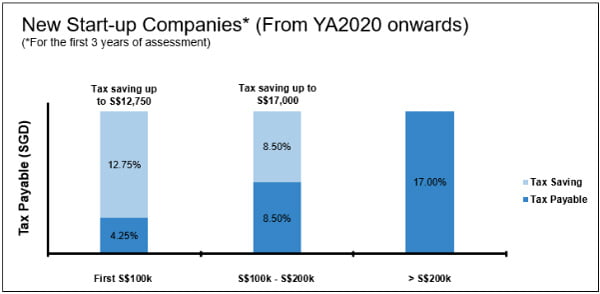
Singapore is a strategic base to implement your growth strategies and to manage and integrate your operations for the region and beyond. Being one of the lowest income tax rate countries, Singapore has further announced a full and partial tax exemption for the newly incorporated company for the first 3 years consecutively.
With effect from 2010, Singapore corporate income tax rate has further reduced from 18% to 17%, being one of the lowest tax rates in the world.
Singapore Government has declared a new start-up tax exemption for newly incorporated and partial tax exemption for existing companies:

| Albania | Jersey | Slovak Republic |
|---|---|---|
| Australia | Kazakhstan | Slovenia |
| Austria | South Korea | South Africa |
| Bahrain | Kuwait | Spain |
| Bangladesh | Laos | Sri Lanka |
| Barbados | Latvia | Sweden |
| Belarus | Libya | Switzerland |
| Belgium | Liechtenstein | Taiwan |
| Brunei | Lithuania | Thailand |
| Bulgaria | Luxembourg | Tunisia |
| Cambodia | Malaysia | Turkey |
| Canada | Malta | Turkmenistan |
| China | Mauritius | Ukraine |
| Cyprus | Mexico | United Arab Emirates |
| Czech Republic | Mongolia | United Kingdom |
| Denmark | Morocco | Uruguay |
| Ecuador | Myanmar | Uzbekistan |
| Egypt | Netherlands | Vietnam |
| Estonia | New Zealand | Bahrain* |
| Ethiopia | Nigeria | Brazil* |
| Fiji | Norway | Chile* |
| Finland | Oman | Hong Kong* |
| France | Pakistan | Oman* |
| Georgia | Panama | Saudi Arabia* |
| Germany | Papua New Guinea | United Arab Emirates* |
| Ghana | Philippines | United States of America* |
| Guernsey | Poland | Bermuda** |
| Hungary | Portugal | United States of America** |
| India | Qatar | Armenia*** |
| Indonesia | Romania | Brazil*** |
| Ireland | Russian Federation | Gabon*** |
| Isle of Man | Rwanda | Germany*** |
| Israel | San Marino | Greece*** |
| Italy | Saudi Arabia | Indonesia*** |
| Japan | Seychelles | Kenya*** |
Note:
* Limited Treaties
** Exchange of Information Arrangements
*** Agreements Which Are Signed But Not Ratified


4%
16%
27%

A. The Labuan Business Activity Tax (Requirements for Labuan Business Activity) Regulation 2021 has been gazetted on 22 November 2021 and are deemed to have come into operation on 1 January 2019, a Labuan company carrying on a Labuan business activity is only subject to tax at the rate of 3% of net profit PROVIDED that it has fulfilled the requirement of the number of full time employees and an amount of annual operating expenditure as specified in the Schedule below:
Labuan Company Carrying on a Labuan Business Activity
Minimum Number of Full Time Employees in Labuan
Minimum Amount of Annual Operating Expenditure in Labuan (RM)
Labuan Insurer, Labuan reinsurer, Labuan takaful operator or Labuan retakaful operator
3
200,000
Labuan underwriting manager or Labuan underwriting takaful manage
100,000
Labuan insurance manager or Labuan takaful manager
Labuan insurance broker or Labuan takaful broker
2
100,000
100,000
100,000
Labuan bank, Labuan investment bank, Labuan Islamic bank or Labuan Islamic investment bank
3
200,000
Labuan trust company
3
Labuan leasing company or Labuan Islamic leasing company
4 per group
Labuan credit token company or Labuan Islamic credit token company
2
Labuan development finance company or Labuan Islamic development finance company
2
100,000
Labuan building credit company or Labuan Islamic factoring company
2
Labuan factoring company or Labuan Islamic factoring company
2
100,000
Labuan money broker or Labuan Islamic factoring company
2
Labuan fund manager
2
100,000
Labuan securities license or Labuan Islamic securities license
2
Labuan fund administrator
2
100,000
Labuan company management
2
100,000
2
120,000
Self-regulatory organisation or Islamic self-regulation organisation
2
50,000
20,000
20,000
B. Management And Control Requirement For Labuan Entity That Undertakes Pure Equity Holding Activities
Regulation 3, The Labuan Business Activity Tax (Requirements for Labuan Business Activity) Regulation 2021 which is deemed to have come into operation on 1 January 2021, requires the above mentioned company to comply with the following:
C. Income derived from intellectual property rights is subject to tax at the rate of 17% or 24% under Income Tax Acts 1967(“ITA”) .
With effect from 1 Jan 2019, under Income Tax (Deductions Not Allowed for Payment Made to Labuan Company by Resident) Rules 2018 (Amendment) 2020, the following type of payments made to a Labuan Entity by a company resident in Malaysia are not entitled to a tax deduction:
Type of payment
Amount not allowed for deduction
Interest payment
Lease rental
Other payments


Labuan Company
BVI Company
Labuan is low-tax jurisdiction country.
BVI is tax-free jurisdiction country.

Certain home country may impose the income tax law on incomes deriving from offshore, if they have not been taxed offshore, particularly, when they are remitted back, this may appy to BVI Co but not Labuan Co as it pays minimum tax.
Labuan Co enjoys more than 70 countries’ double tax treaties (DTAs).
BVI enjoys only 2 countries’ (Japan and Switzerland) double tax treaties (DTAs), and these treaties are not used in practise.
Dividend declared from Labuan Co to Malaysia is free of tax.
Dividend declared from BVI co may subject to income tax.
Note: If the company is Non-Malaysian Co, the tax exemption will depend on each home country’s law jurisdiction and its double tax treaties with Malaysia.
No withholding tax on interest payment.
BVI has applied the European Union (EU) Savings Directive since 1 July 2005. A withholding tax (initially 15%, rising to 20% from 1 July 2008) has been applied to interest payments to natural persons resident within the EU.
Labuan has its registered auditor under its jurisdiction. The income tax payable is allowed to base on the audited profit, the source of income is cleared for reinvestment or dividend purpose, once it is paid.

Suitable Industries :
Tax Advantages

Suitable Industries :
Tax Advantages
Income tax is only 3% of net profit

Suitable Industries :
Tax Advantages
Other Advantages

